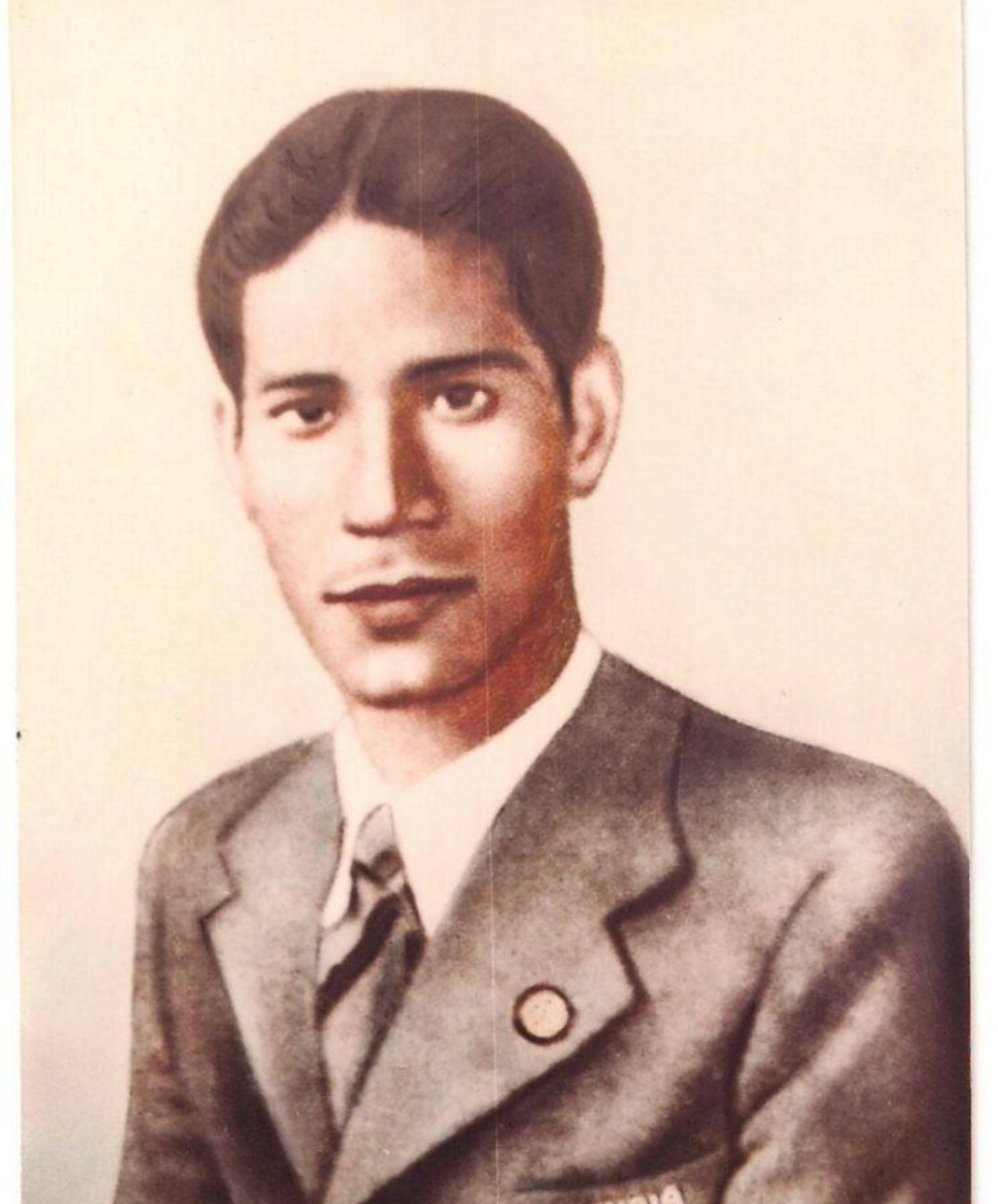
The Olympic captain could have chased football fame. Instead, he returned home, became a doctor, served a young Nagaland and lived by a principle that mattered more to him than any trophy.
There is a temptation, when remembering great sportsmen, to freeze them in their prime.
The photograph.
The jersey.
The captain’s armband.
The Olympic stadium.
The moment when they were young, strong and at the centre of the world.
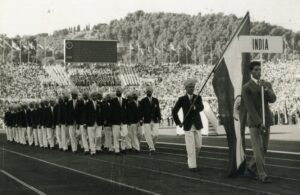
For Talimeren Ao, that photograph is 1948.
He is standing among India’s footballers.
He is the captain.
The Olympic flag-bearer.
The Naga who had reached London.
But that was only one chapter.
Because after the Olympics, after Mohun Bagan, after the European tour and after the applause had faded, Talimeren Ao made a decision that would define the rest of his life.
He went home.
And he became a doctor.
WHEN THE FOOTBALL STOPPED
Ao completed his MBBS in 1950.
He had already achieved what few Indian footballers of his generation could imagine.
He had captained independent India’s first Olympic football team.
He had played for Mohun Bagan.
He had toured Europe.
He had become one of the most recognisable footballers in the country.
But medicine had never been a side project.
It was the promise he had made to his father.
After completing his degree, Ao joined Dibrugarh Medical College, where he worked as a Registrar in ENT. In 1953, he moved to Kohima as an Assistant Surgeon.
The footballer was becoming a physician.
And the journey that would eventually make him one of the most important medical administrators in Nagaland had begun.
THE DECISION TO COME HOME
Ao had opportunities elsewhere.
According to accounts preserved by his family and later reported by ESPN, he was approached about joining the Indian Army’s medical corps but declined.
There was a reason.
His father’s final wish had been that he return to his people.
Ao had taken that instruction seriously.
He had seen Calcutta.
He had seen the world.
He had stood at Wembley.
But he belonged to Nagaland.
And so he returned.
It was a choice that tells us perhaps more about Talimeren Ao than any football statistic ever could.
He had already discovered that football could take him away from home.
Now medicine would bring him back.
KOHIMA: THE DOCTOR
In 1953, Ao began working in Kohima.
This was not the Kohima we know today.
Nagaland was still part of Assam.
The state itself did not yet exist.
Healthcare infrastructure was limited, and the responsibilities placed on doctors serving the region were enormous.
Ao became a physician who was not simply treating patients inside a hospital.
He was helping build a medical system.
He treated patients.
He performed operations.
He served as a medical administrator.
And slowly, his reputation shifted.
He was no longer simply Dr. T. Ao the footballer.
He was becoming Dr. T. Ao the doctor.
1963: A NEW STATE
Then came one of the most significant moments in Nagaland’s history.
December 1, 1963.
Nagaland became India’s 16th state.
And as the new state began building its institutions, Ao was appointed the first Naga Director of Health Services.
He held the position until his retirement in 1978.
Think about the significance of that.
The man who had once been captain of India’s football team was now helping shape one of the foundational public services of the newly created state.
Football had made him famous.
Medicine made him useful.
And Ao chose usefulness.
THE DOCTOR WHO DIDN’T CHOOSE SIDES
Perhaps the most revealing story of Ao’s medical career came during the years of Naga insurgency.
Nagaland was going through an intensely difficult period.
There was conflict.
There were soldiers.
There were underground fighters.
And there were civilians caught between them.
Ao was a doctor.
And for him, that came first.
His family later recalled how he treated soldiers and insurgents alike.
Some military personnel questioned why he would operate on men regarded as “undergrounds”.
His response was simple:
He was a doctor.
He had taken an oath.
And he had to treat human beings — regardless of which side they belonged to.
That story is more revealing than any medal.
Because it shows us the man behind the legend.
Football had taught Ao competition.
Medicine taught him something different.
Human life was not a competition.
THE PRINCIPLE ABOVE THE PERSON
This is where the story of Dr. T. Ao becomes bigger than sport.
A footballer can have a favourite team.
A supporter can choose a side.
A politician can choose a position.
But a doctor cannot decide that one patient’s life matters more than another’s because of who they are.
Ao understood that.
And during one of the most difficult periods in Nagaland’s history, he held onto that principle.
He treated the patient in front of him.
Not the uniform.
Not the politics.
Not the label.
The person.
HE NEVER REALLY LEFT FOOTBALL
Yet giving up competitive football did not mean giving up football.
Far from it.
Ao continued to encourage young players.
He organised a Medical Football Team.
He took a keen interest in local tournaments.
He remained connected to the development of sport in the region.
His government biography records that even while serving in the health department, his enthusiasm for sport remained undiminished.
This is important.
Ao did not see sport as something that ended when a player retired.
He saw it as something that could build people.
And he wanted young Nagas to have the opportunities he had once chased himself.
FROM PLAYER TO BUILDER
In 1968–69, Ao was selected as a member of the All India Football Selection Committee.
Later, he became a member — and eventually an Executive Member — of the All India Council of Sports.
He also served on the Nagaland Sports Council.
The significance of this transition should not be overlooked.
Ao had gone from:
player → captain → doctor → administrator → sports builder.
He was no longer simply participating in football.
He was helping shape it.
And his influence extended beyond football.
SPORT AS A WAY OF LIFE
Ao believed strongly in sport as part of a healthy life.
He encouraged local footballers.
He helped organise teams.
And in his later years, he took up badminton.
The same man who had once represented India in football was still competing with the same curiosity about sport.
The game had changed.
His body had changed.
But the instinct remained.
Stay active.
Keep learning.
Keep moving.
Keep competing with yourself.
THE FAMILY SAW ANOTHER AO
To the rest of India, Talimeren Ao was an Olympic captain.
To Nagaland, he was a pioneer.
To football fans, he was a legend.
But to his children, he was simply Dad.
And that version of Ao was different.
ESPN’s detailed account of his family life describes a man who could be jovial but was generally reserved, someone who did not speak unnecessarily and often answered questions briefly. His children had to ask him repeatedly before he would tell them about his football career.
That is almost amusing when you consider what he had achieved.
A man who had captained India at the Olympics apparently didn’t feel the need to sit his children down and tell them how important he was.
They had to discover it.
Through photographs.
Through medals.
Through stories.
Through old certificates.
Through the people who still remembered him.
THE MAN BEHIND THE TROPHIES
His family kept the physical evidence.
Trophies.
Medals.
Certificates.
Photographs.
And among the possessions described by ESPN was his old, worn doctor’s case.
There is something beautifully symbolic about that.
The football trophies represented the man the world knew.
The doctor’s case represented the man Nagaland needed.
One belonged to his sporting past.
The other belonged to his service.
Ao carried both identities throughout his life.
A NAGA FIRST
By the time he retired in 1978, Ao had accumulated an extraordinary list of firsts.
India’s first Olympic football captain after independence.
First Naga Olympian.
First Naga to earn an MBBS.
First Naga Director of Health Services.
But perhaps the word “first” doesn’t quite capture what he achieved.
Because he wasn’t simply first.
He was a pathfinder.
Before Ao, a young Naga dreaming of an Olympic career or a medical profession had little evidence that such a journey was possible.
After Ao, there was proof.
Someone had done it.
Someone from their hills had reached London.
Someone from their community had become a doctor.
Someone had served the state.
The ceiling had been broken.
THE CHOICE THAT SAYS EVERYTHING
There is one recurring thread in almost every serious account of Ao’s life.
He had opportunities to remain elsewhere.
Calcutta.
Football.
The possibility of professional opportunities abroad.
Even the reported Arsenal interest.
But he repeatedly chose to return.
He chose Nagaland.
He chose service.
He chose the promise he had made to his father.
And perhaps most importantly, he chose to define success on his own terms.
For another footballer, success might have meant playing another decade.
For Ao, success eventually meant something else.
Being useful to his people.
THE LEGACY OF A MEDICAL FOOTBALLER
It is easy to divide Ao’s life into two halves.
Footballer.
Doctor.
But perhaps that’s the wrong way to see it.
His football career and medical career were connected by the same qualities.
Discipline.
Fitness.
Leadership.
Courage.
Responsibility.
Teamwork.
The ability to make decisions under pressure.
The willingness to keep going when circumstances became difficult.
These qualities made him a footballer.
They also made him a doctor.
And later, a public servant.
WHEN THE FOOTBALLER BECAME THE TEACHER
Ao’s greatest contribution to football after retirement may not have been any selection committee or tournament.
It may have been the simple act of encouraging young players.
He had seen what sport could do.
He knew that a football field could give a young person confidence.
He knew that competition could teach discipline.
He knew that sport could open doors.
And he wanted the next generation to have those doors open.
The Nagaland government records his efforts to encourage local football talent and organise football activities even while he was working in public health.
That is how a footballer becomes part of a football culture.
Not by scoring forever.
By creating players who come after him.
A LIFE BETWEEN TWO WORLDS
Perhaps no single description captures Talimeren Ao.
He was a footballer.
But he was also a doctor.
A Naga.
But also an Indian Olympic captain.
A sportsman.
But also a public servant.
A celebrated figure.
But, according to his family, a relatively quiet man at home.
He lived between worlds.
And instead of allowing those identities to compete, he carried them together.
THE MAN WHO CAME HOME
The temptation after achieving something extraordinary is to stay where the world is watching.
Ao did the opposite.
He came home.
He built his career in Nagaland.
He served its people.
He helped its health system.
He encouraged its athletes.
He contributed to its sporting institutions.
And when Nagaland became a state in 1963, he was there to help build what came next.
That may ultimately be the most important part of his legacy.
He didn’t simply represent Nagaland to the world.
He returned to help build Nagaland.
MORE THAN A FOOTBALLER
When we call Talimeren Ao an Olympic football legend, we are telling the truth.
But we are only telling half of it.
The other half is a doctor walking into a hospital.
A public servant helping build a new state’s health services.
A man treating people on opposite sides of a conflict because his oath demanded it.
A sportsman encouraging young footballers long after his own playing career had ended.
A father who apparently did not feel the need to boast about the history his children had inherited.
And a Naga who had seen the world but chose to return home.
That is Dr. T. Ao.
Not simply the man who carried India’s flag.
But the man who came home carrying a responsibility.
THE TROPHY IS ONLY PART OF THE LEGACY
This is why the name on Nagaland’s biggest inter-district football trophy matters.
When today’s players compete for the Dr. T. Ao Trophy, they are not simply competing for the name of an Olympic footballer.
They are competing under the name of a man who believed sport could develop people.
A man who believed education mattered.
A man who believed service mattered.
A man who believed a doctor’s duty extended beyond politics.
And a man who chose to return home when he could have stayed elsewhere.
The trophy carries his name.
But his legacy is much larger than the trophy.
THE FINAL LESSON
Perhaps the greatest lesson of Talimeren Ao’s life is not about football at all.
It is about what happens after you achieve your dream.
He reached the Olympics.
Then what?
He became a doctor.
He became a public servant.
He helped build a state.
He encouraged another generation.
He kept serving.
That is the part of his story that deserves to be told alongside the photographs of Wembley.
Because greatness is not only measured by how high someone climbs.
Sometimes it is measured by how much they give back after they get there.
Talimeren Ao reached the Olympic stage.
And then he came home.
THE DR. T. AO LEGACY
PART III — MORE THAN A FOOTBALLER
PART IV COMING NEXT
THE TROPHY THAT CARRIES HIS NAME
From the first inter-district championship to the silver jubilee — how a football tournament became one of Nagaland’s enduring sporting traditions.