A silver jubilee, 17 districts and a tournament carrying the name of one of Nagaland’s greatest sporting sons — Mokokchung is preparing for a Dr. T. Ao Trophy unlike any other.
There are football tournaments.
And then there are tournaments that carry something much bigger than a trophy.
On October 12, the Dr. T. Ao Inter-District Football Championship will return with its 25th edition — a silver jubilee celebration that will bring Nagaland’s district footballing pride together in Mokokchung.
For three weeks, from October 12 to 31, the Renpao Lu Astro Turf Ground at Ungma will become the stage for the state’s premier inter-district football championship, with all 17 districts of Nagaland invited to compete.
But this year’s tournament is not simply about who lifts the trophy.
It is about where the trophy is being contested, whose name it carries and what that name still means to generations of footballers.
Because the 25th Dr. T. Ao Trophy is coming to the district that gave Nagaland — and Indian football — one of its most remarkable sporting figures.
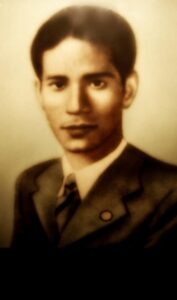
Talimeren Ao.
And this time, the story is coming home.
A TOURNAMENT WITH 25 EDITIONS BEHIND IT
The competition has been part of Nagaland’s football story for decades.
Its roots go back to 1976, when the Inter-District Football Championship was established to promote competition among the state’s districts. In 2004, the championship was renamed the Dr. T. Ao Trophy, honouring the footballer who had already become one of the defining figures in Nagaland’s sporting history.
What began as a platform for district competition has grown into one of the state’s most significant football events.
The tournament has evolved alongside Nagaland football itself — from an era of limited infrastructure and grassroots football to one of district teams, structured preparation, modern playing surfaces and increasingly large audiences.
The 2025 edition provided perhaps the clearest picture yet of the competition’s reach.
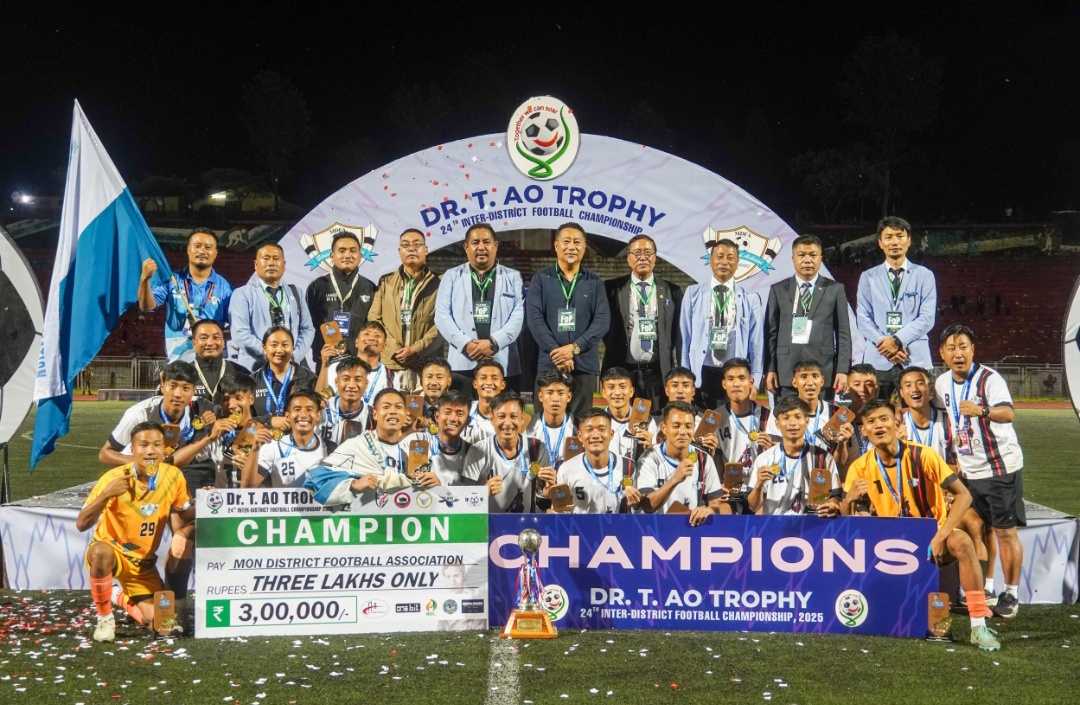
More than 28,000 spectators packed Indira Gandhi Stadium in Kohima for the final, while the match attracted more than 1.5 lakh online viewers during the broadcast. On the pitch, Mon made history by winning their maiden Dr. T. Ao Trophy, defeating Niuland 5–4 on penalties after the final ended 1–1 following extra time.
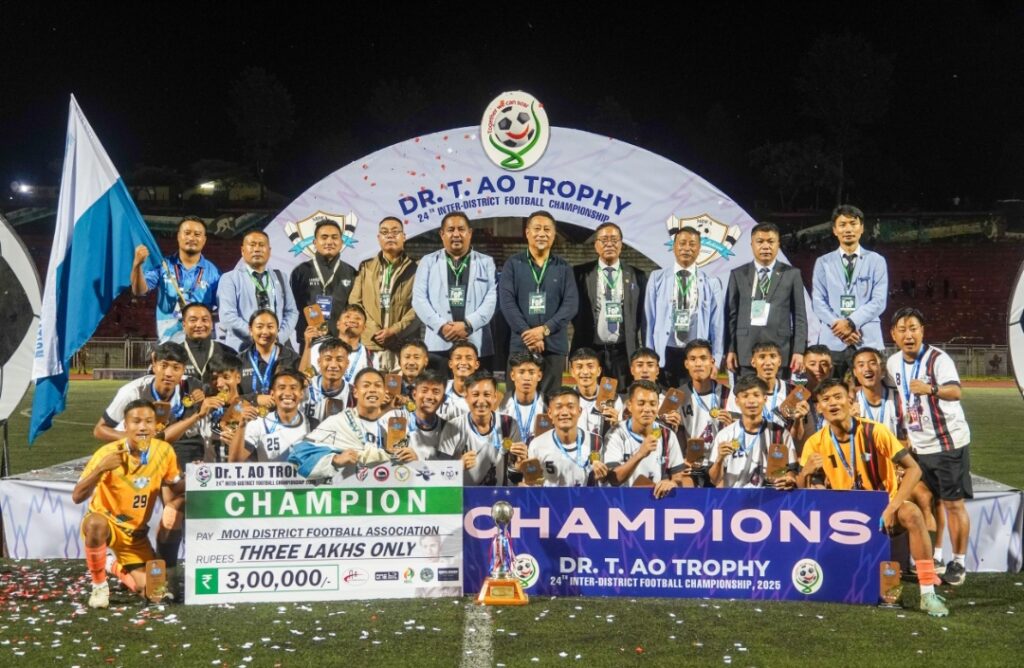
Now, the champions will return to defend their crown.
And 16 other districts will arrive with the same ambition:
to take it away.
BUT THIS EDITION IS DIFFERENT
The significance of the 25th edition was recognised long before the opening whistle.
The Nagaland Football Association announced the dates during its annual general body meeting in July, confirming October 12–31 and entrusting the hosting responsibility to the Mokokchung District Football Association.
The NFA has invited all 17 district football associations to participate, with registrations scheduled to close at the end of September.
For Mokokchung, hosting the silver jubilee is about more than putting on a football tournament.
It is about hosting a celebration of a legacy that began in its own soil.
The MDFA has described the occasion as a significant responsibility, while preparations have been underway for months. An organising committee was constituted in October 2025, and the NFA and MDFA have since made visits to both Changki, Dr. T. Ao’s native village, and Impur, where the young Talimeren Ao developed his footballing foundations.
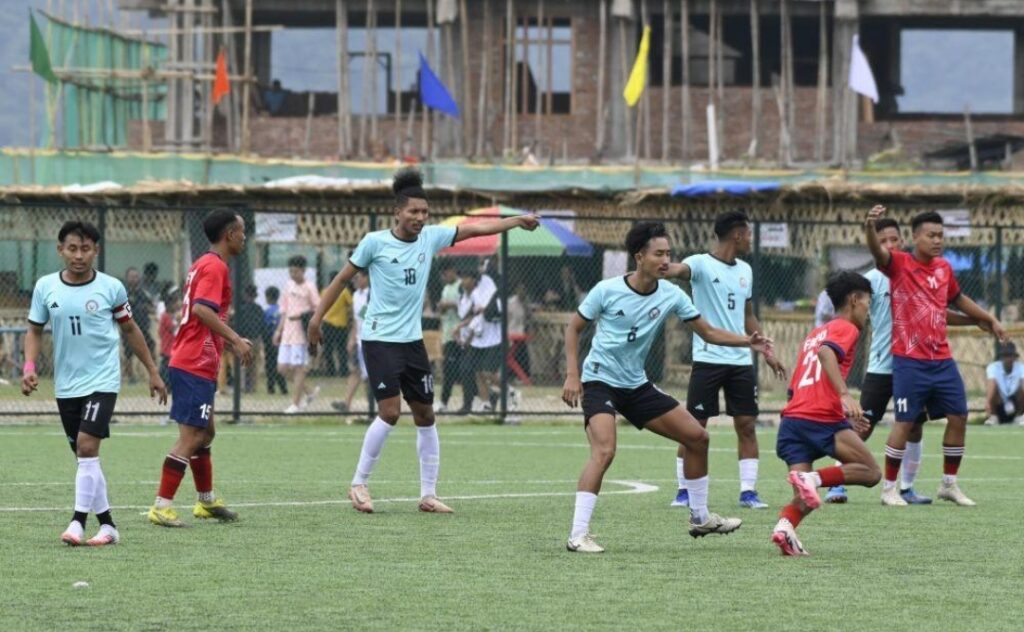
The symbolism is difficult to miss.
The tournament named after Dr. T. Ao is coming to the place from which his story began.
THE BOY FROM CHANGKI
Long before the Olympic stadiums, the Mohun Bagan jersey and the captain’s armband of India, Talimeren Ao was simply a young boy from Changki who loved football.
Born on January 28, 1918, in Changki village, Ao grew up in the Naga Hills and received his early education at the American Missionary School at Impur.
It was there that football became part of his life.
The stories from his early years paint a very different picture from the modern football environment.
There were no academies, synthetic pitches or specialised training centres.
At Impur, young boys played barefoot and improvised with whatever they could find. Historical accounts recall children using makeshift balls made from rags, cane strips and even pomelos.
Among them was a young Talimeren Ao.
He watched.
He learned.
He played.
And eventually, he became exceptional.
That journey would take him far beyond the hills of Nagaland.
Ao went on to play for Cotton College and Maharana Club in Guwahati before joining the legendary Mohun Bagan in Kolkata in 1943.
He would captain the famous club and establish himself as one of the outstanding footballers of his generation.
But the defining chapter was still to come.
LONDON, 1948
In 1948, only a year after India’s independence, Talimeren Ao walked onto the Olympic stage in London as captain of India’s football team.
He was also chosen as the flag-bearer of the Indian contingent at the opening ceremony.
India’s footballers famously played barefoot, and although the team did not progress beyond the first round after a 2–1 defeat to France, the significance of that team — and Ao’s role at its head — has endured. Olympedia records him as captain of India’s first Olympic football team and flag-bearer at the 1948 Games.
For Nagaland, the achievement carries an even deeper significance.
A young footballer from Changki had reached the biggest sporting stage in the world.
And he had arrived there as captain of India.
THE FOOTBALLER WHO BECAME A DOCTOR
Perhaps what makes Dr. T. Ao’s story so powerful is that football was never the entirety of his identity.
He studied medicine in Kolkata and completed his MBBS in 1950 before returning to the Northeast to serve as a physician.
He eventually became the first Naga Director of Health Services and continued his professional career in medicine long after his playing days had ended.
Football gave him a platform.
But education, service, discipline and character defined the man.
That is the legacy behind the trophy.
And that is why the name Dr. T. Ao means more than football in Nagaland.
FROM IMPUR TO RENPAO LU
There is perhaps no better way to understand the significance of the 25th edition than to look at the changing landscape around the tournament.
The ground at Impur, where Dr. T. Ao developed his early footballing skills, was officially renamed the Dr. T. Ao Ground in February 2026.
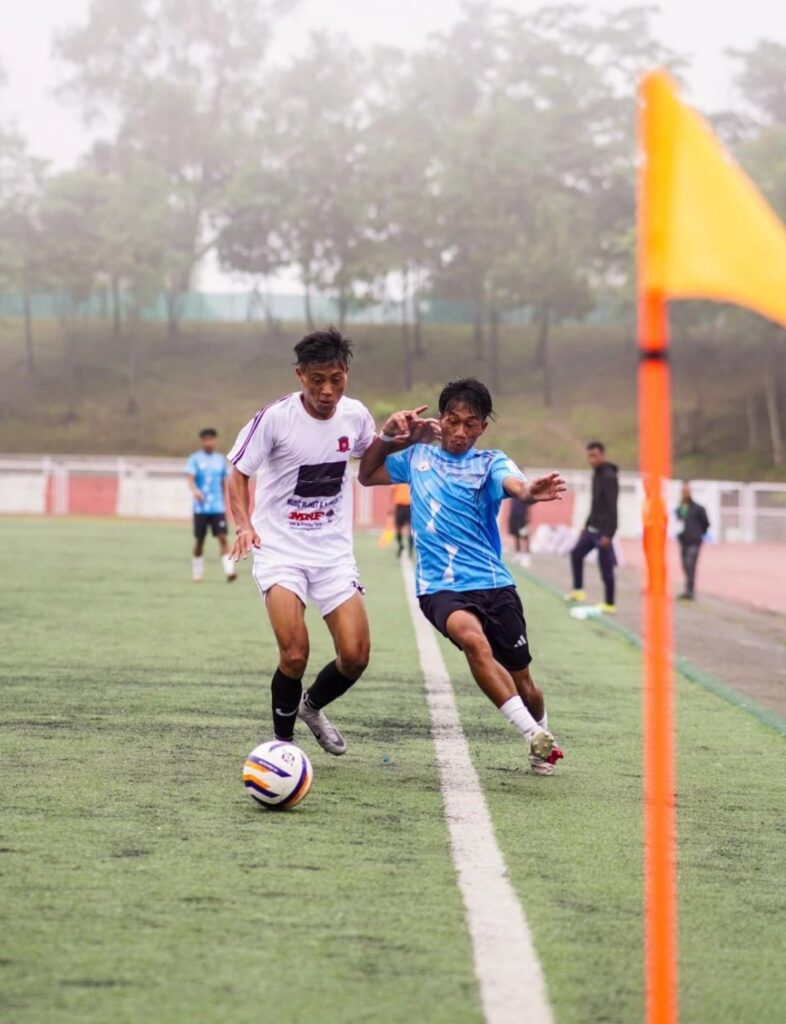
The renaming was carried out by the Ao Baptist Arogo Mungdang in collaboration with the Nagaland Football Association and Mokokchung District Football Association.
An exhibition match between NFA XI and ABAM XI followed the ceremony, ending 1–1.
And now, not far from that historical connection, a new generation will compete on a modern Astro Turf in Ungma.
The Renpao Lu Astro Turf Ground is being prepared specifically for the silver-jubilee tournament.
Organisers reported in August that construction was around 80 per cent complete. The permanent gallery is expected to seat around 4,000 spectators, with temporary arrangements taking the planned capacity to approximately 5,000.
Transportation for spectators and live streaming of matches are also planned.
It is an extraordinary contrast.
From improvised footballs at Impur to AstroTurf at Ungma.
From barefoot football to a modern district championship.
From the boy who dreamed of football in Changki to 17 districts arriving in Mokokchung with dreams of their own.
17 DISTRICTS. ONE TROPHY.
The exact squads, groups and matchups are still to come.
Registrations remain open until the end of September, meaning the competitive picture will continue to take shape over the coming weeks.
But one thing is already certain.
When the tournament begins on October 12, district football will once again become a matter of enormous pride.
Every team will carry its district.
Every player will carry expectations.
And every match will be another chapter in a competition that has been part of Nagaland football for half a century.
For defending champions Mon, it will be about proving that their 2025 triumph was the beginning of something rather than a one-off.
For Niuland, it will be another opportunity after coming agonisingly close last year.
For the remaining districts, it will be a chance to write their own chapter.
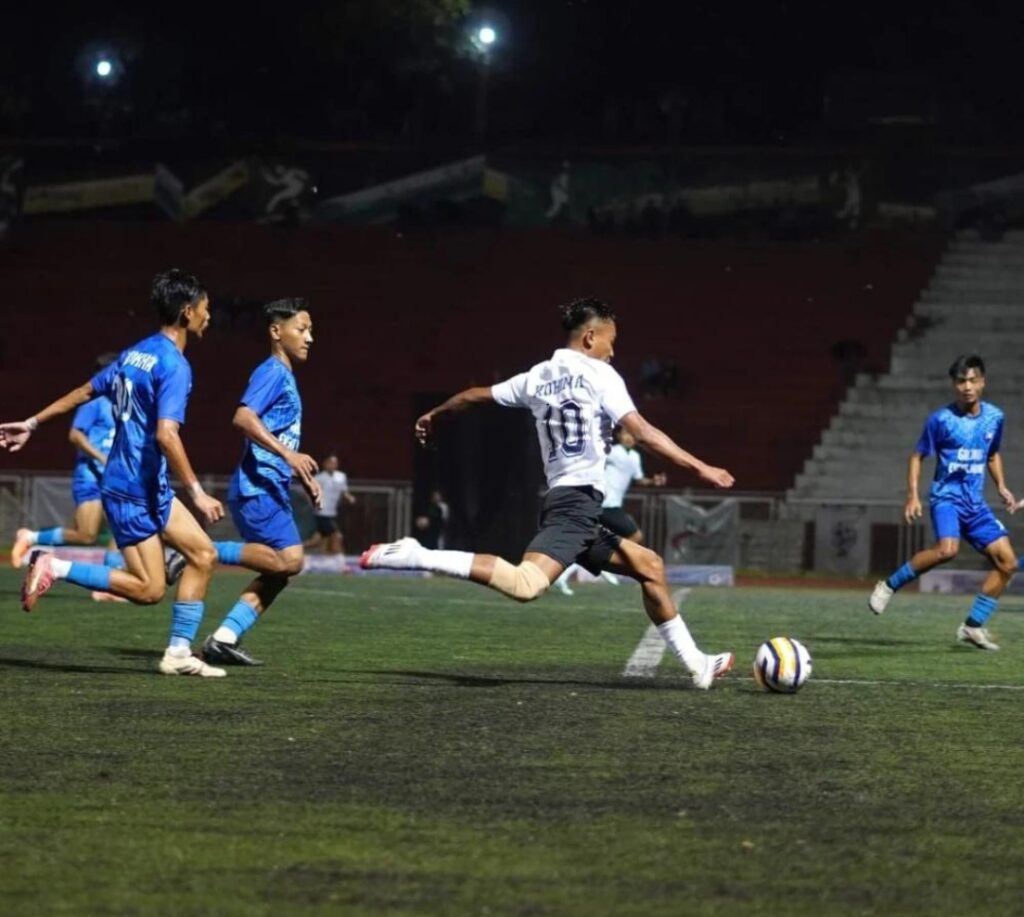
And for the young players stepping onto the pitch for the first time, it may be the beginning of a journey that takes them far beyond the tournament itself.
A SILVER JUBILEE. A HOMECOMING.
Twenty-five editions.
Five decades of history.
Seventeen districts.
One trophy.
And the name of a man who once carried the hopes of a young India onto the Olympic stage.
The 25th Dr. T. Ao Trophy is therefore more than a competition.
It is a meeting point between past and present.
Between the football played on rough grounds and the football played under modern lights.
Between the legacy of one extraordinary Naga and the ambitions of an entirely new generation.
And perhaps most importantly, it is a reminder that the greatest sporting legacies are not preserved simply by remembering the people who created them.
They are preserved by giving the next generation somewhere to play, something to believe in and a standard to chase.
On October 12, the ball will roll in Mokokchung.
The 25th chapter will begin.
And for three weeks, Nagaland will have its eyes on one trophy.
The Dr. T. Ao Trophy.
The Road to 25 starts now.