THE BOY FROM CHANGKI
Long before he captained India at the Olympics, before Mohun Bagan, before the doctor, before the legend — Talimeren Ao was simply a boy from Changki who fell in love with football.
There is something fitting about the 25th Dr. T. Ao Trophy returning to Mokokchung.
Because before the Olympic stadiums of London, before the roar of Kolkata’s football grounds and before his name became woven into the history of Indian football, Talimeren Ao was a boy from Changki.
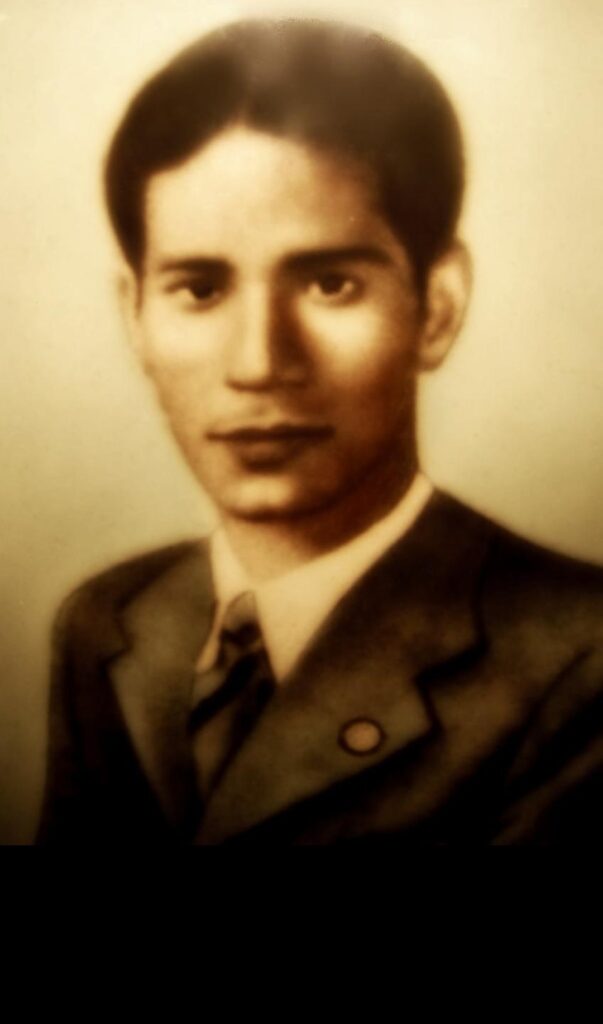
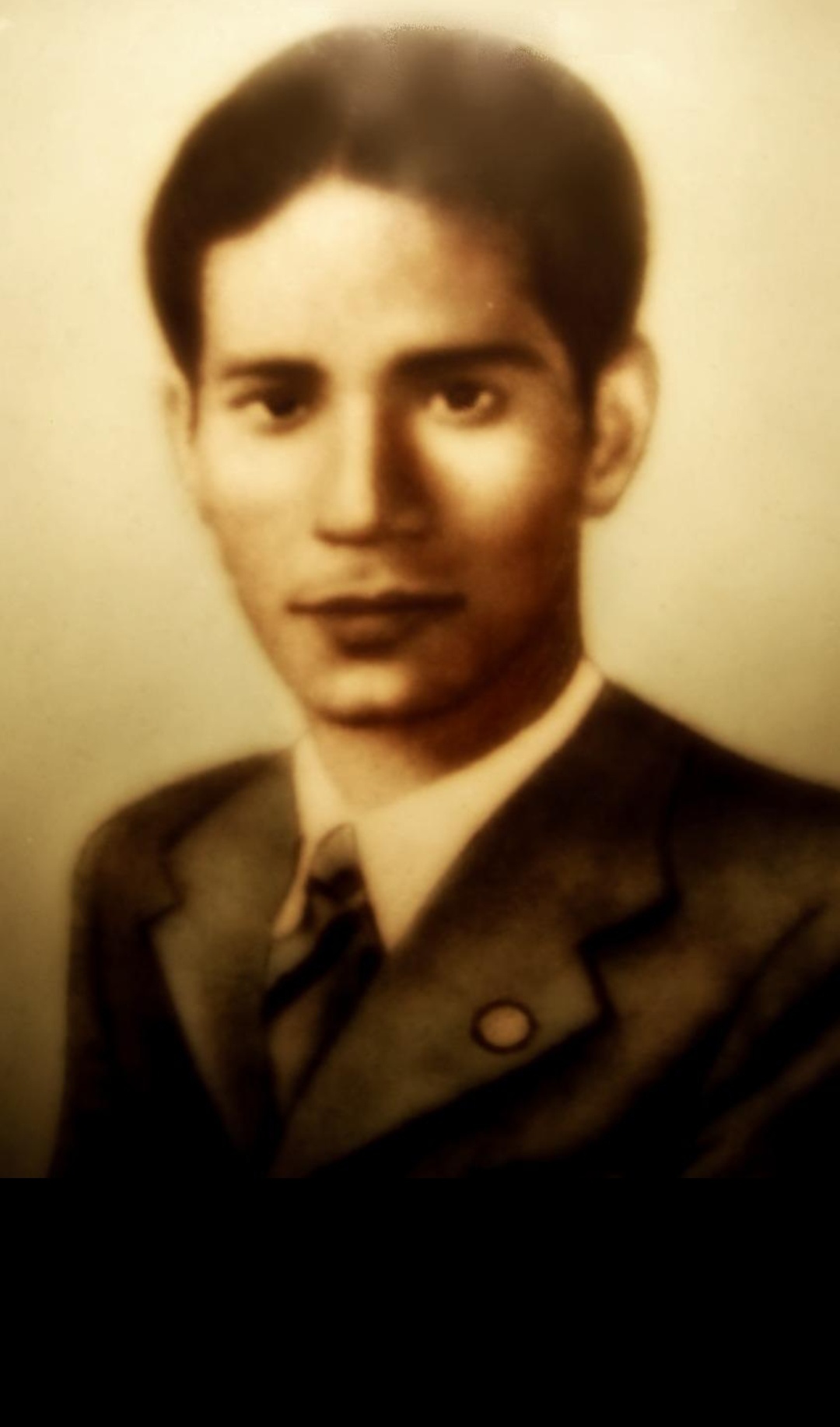
He was born on January 28, 1918, in Changki village in the Naga Hills, then part of the undivided province of Assam and today part of Mokokchung district, Nagaland.
His father, Reverend Subongwati Ningdangri, was a Baptist missionary and one of the pioneering Naga Christian leaders of his time. His mother was Maongsangla Changkilari.
And somewhere in those hills, a footballing story was beginning.
Nobody in Changki could have known where it would lead.
BEFORE THE LEGEND
To understand Dr. T. Ao, it is important to forget the photographs for a moment.
Forget the Olympic captain.
Forget the Mohun Bagan shirt.
Forget the stories of the great Indian footballer.
Go back to the beginning.
Go back to a Nagaland where football was not played on immaculate pitches, where there were no academies, no GPS trackers, no boots designed for specific surfaces and no structured pathway from grassroots football to the professional game.
At Impur, where Ao received his early education at the American Missionary School, football was a game played with whatever could be found.
Balls were scarce.
Young boys improvised.
Historical accounts describe children playing with balls made from rags, cane strips and even pomelos.
It was rough, inventive football — played barefoot, often on small grounds and without any of the conveniences today’s young footballers take for granted.
And Talimeren Ao loved it.
There was something else about those games.
They demanded control.
A makeshift ball did not behave like a proper football. It bounced differently. It moved differently. It had to be controlled rather than simply kicked.
According to ESPN’s account, Ao’s sons believed those early conditions may even have contributed to his remarkable ability to use both feet.
What began as necessity was quietly becoming an education.
The football pitch was teaching him.
IMPUR: WHERE THE GAME TOOK ROOT
At Impur, the young Talimeren was not simply another boy chasing a ball.
He became the captain of his school football team.
The same boy who was developing as a footballer was also expected to excel in the classroom.
That balance would become one of the defining characteristics of his life.
The Nagaland government’s own Department of Information & Public Relations records that Ao displayed a strong inclination towards sports from childhood while also excelling academically.
It is an important detail.
Because the story of Talimeren Ao was never simply the story of a footballer.
From the very beginning, it was the story of someone who refused to choose between sport and education.
That philosophy would later become part of the legacy he left behind.
But first, there was a much bigger footballing journey waiting for him.
JORHAT: THE WORLD GETS BIGGER
In 1933, Talimeren moved to Jorhat to continue his schooling at the Christian Mission School.
For the young boy from Changki and Impur, this was another step into a much larger world.
It was also where his football began to attract serious attention.
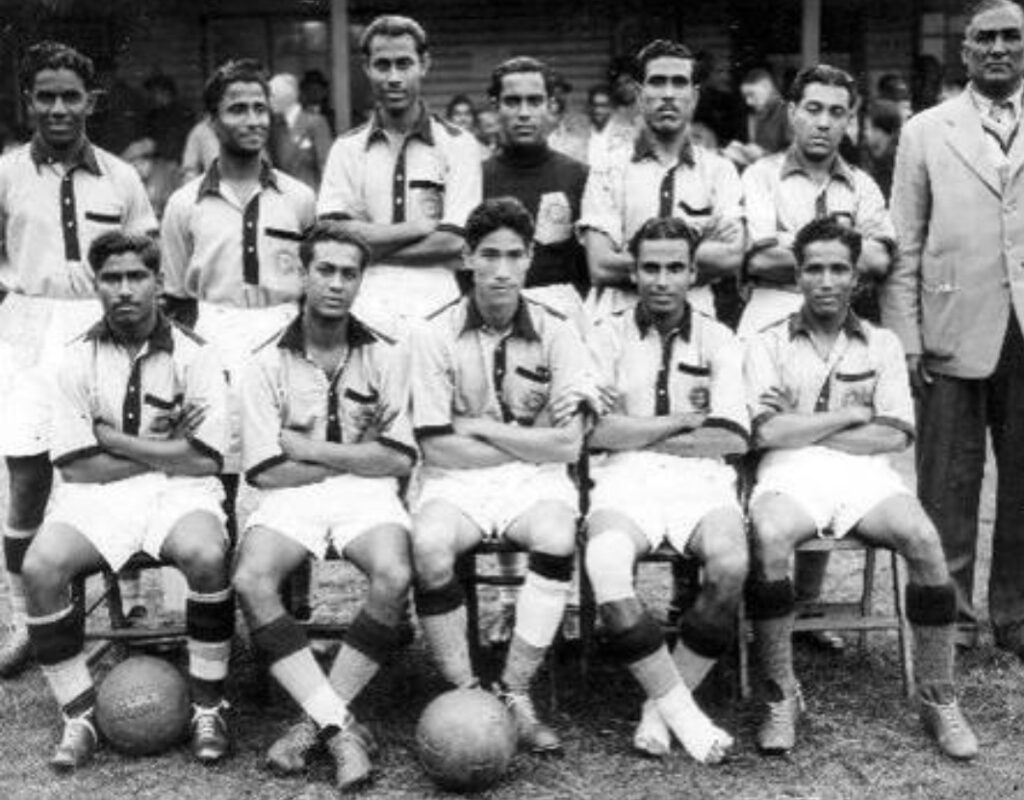
His ability was becoming impossible to ignore.
He captained his school team, and in 1937 he was recognised as the best sportsperson at the Inter-High School Tournament in Jorhat, according to the Nagaland government’s historical account.
Football was no longer simply the game he loved.
It was becoming something he could excel at.
And there was a pattern beginning to emerge.
Whenever Ao entered a new environment, he found his level.
Then he pushed beyond it.
COTTON COLLEGE: THE ATHLETE EMERGES
The next destination was Cotton College in Guwahati.
Here, Ao’s sporting ability truly began to flourish.
He was not just a footballer.
He was an exceptional all-round athlete.
The Nagaland government’s records note that he became the Individual Athletics Champion of Cotton College for three consecutive years and later won the individual athletics championship of Calcutta University in 1946 and 1947.
But football remained at the centre of his sporting identity.
And just beside Cotton College was one of Assam’s most respected football clubs:
Maharana Club.
Ao began watching the club’s players train.
Then he did what would become characteristic of him throughout his career.
He asked if he could train with them.
They let him.
And soon, the young college footballer had stepped into a higher level of competition.
THE STRIKER WHO BECAME A DEFENDER
There is a fascinating part of Ao’s development that can easily get lost beneath the bigger stories.
He did not begin his senior football career as the defender people would eventually remember.
At Cotton College and initially at Maharana, he played as a striker.
Then his football changed.
Maharana’s coaches saw something in him — his physique, temperament, reading of the game and ability to stop attacks.
He was moved deeper.
From striker to midfielder.
Then towards defence.
It was a transformation that would eventually define his career.
At Maharana, he began facing some of the best players and teams of the era. One account recalls Ao being tasked with dealing with the celebrated Noor Mohammed of Hyderabad City Police.
The young footballer from Nagaland was learning by competing against the best players he could find.
He watched them.
Studied them.
Borrowed what worked.
And improved.
This was perhaps one of the earliest signs of the player he would become.
Ao was not satisfied simply being talented.
He wanted to become better.
FOOTBALL WAS NEVER THE ONLY DREAM
There was another ambition running alongside the football.
His father’s wish.
Reverend Subongwati wanted his son to become a doctor and serve his people.
His father died of typhoid in 1935, but the wish remained with Talimeren.
It would eventually shape one of the biggest decisions of his life.
By the early 1940s, football had already opened doors for him. He was becoming a prominent player in Assam and had built a reputation at Maharana.
But instead of simply pursuing football, Ao pursued medicine.
He gained admission to Carmichael Medical College in Calcutta, today known as R. G. Kar Medical College and Hospital.
And that decision would take him to the city that was then the beating heart of Indian football.
CALCUTTA WAS WAITING
In 1943, Talimeren Ao arrived in Calcutta.
And waiting there was another chapter.
His friend from Maharana, Sarat Das, was connected with Mohun Bagan.
Ao was brought into the club.
He had arrived to study medicine.
But football followed him.
And at Mohun Bagan, the transformation from promising Assam footballer to national-level star accelerated.
The player who had started out as a striker was now firmly established as a defender.
His strength, composure and ability to read the game made him a formidable centre-half.
He would go on to captain Mohun Bagan and become one of the most respected footballers of his era.
The boy from Changki had now reached one of the great centres of Indian football.
But the biggest stage was still ahead.
FROM CHANGKI TO LONDON
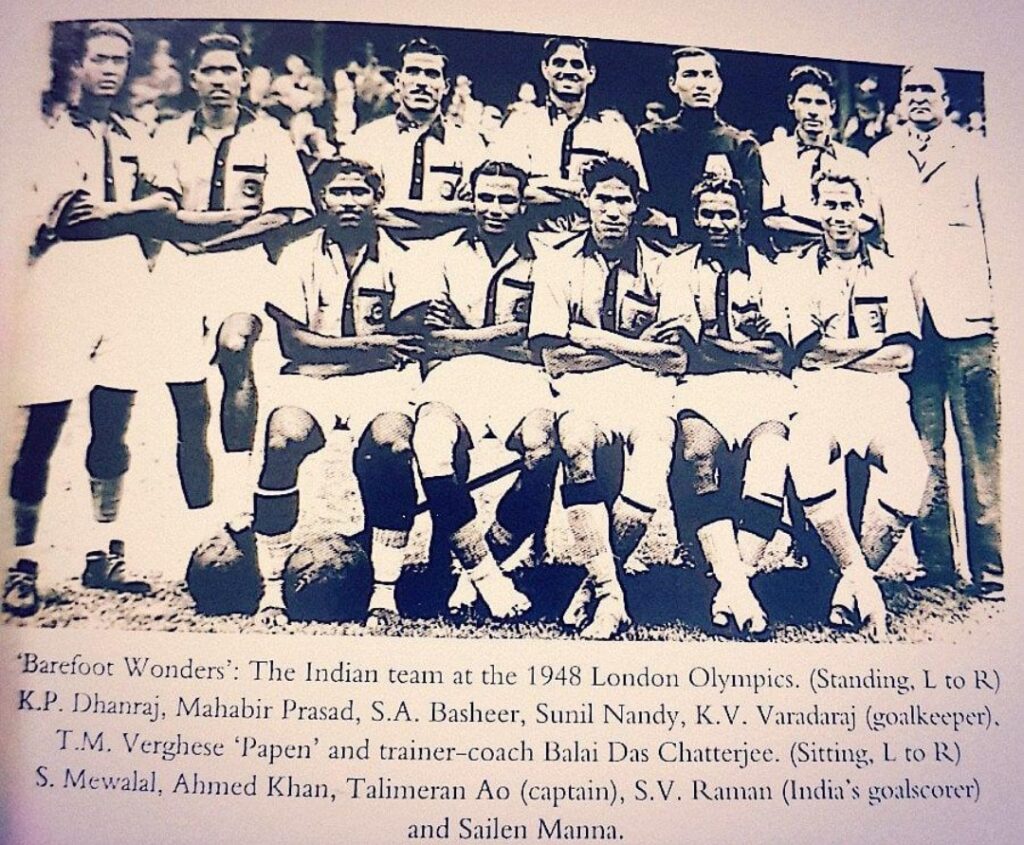
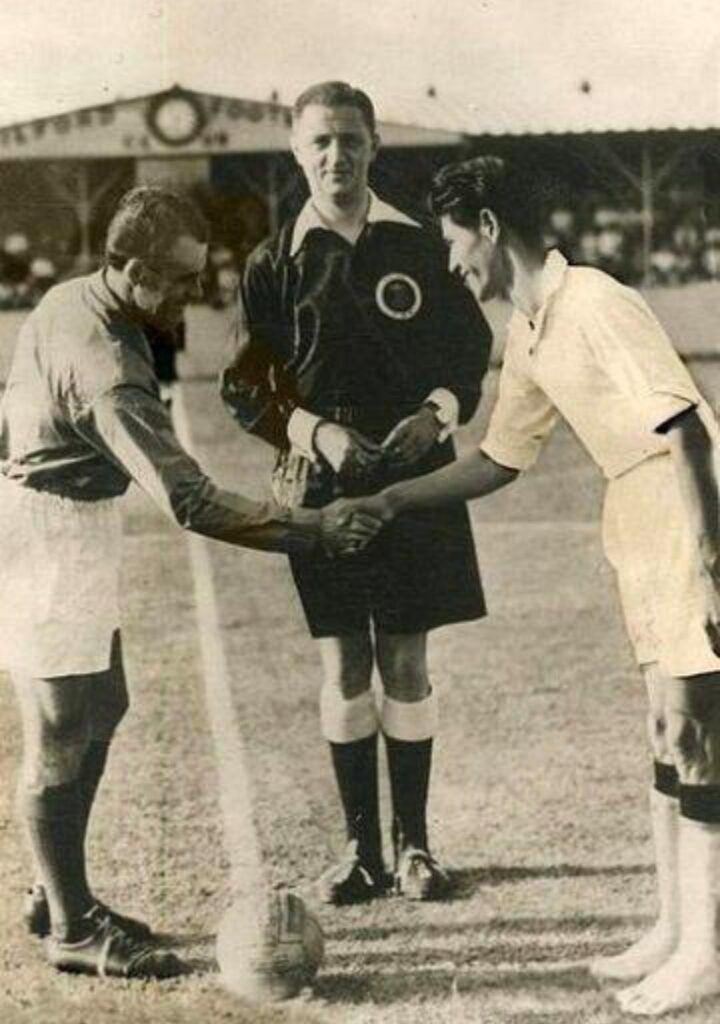
In 1948, barely a year after India became independent, Talimeren Ao was chosen to captain the country’s football team at the London Olympics.
It was India’s first Olympic football appearance as an independent nation.
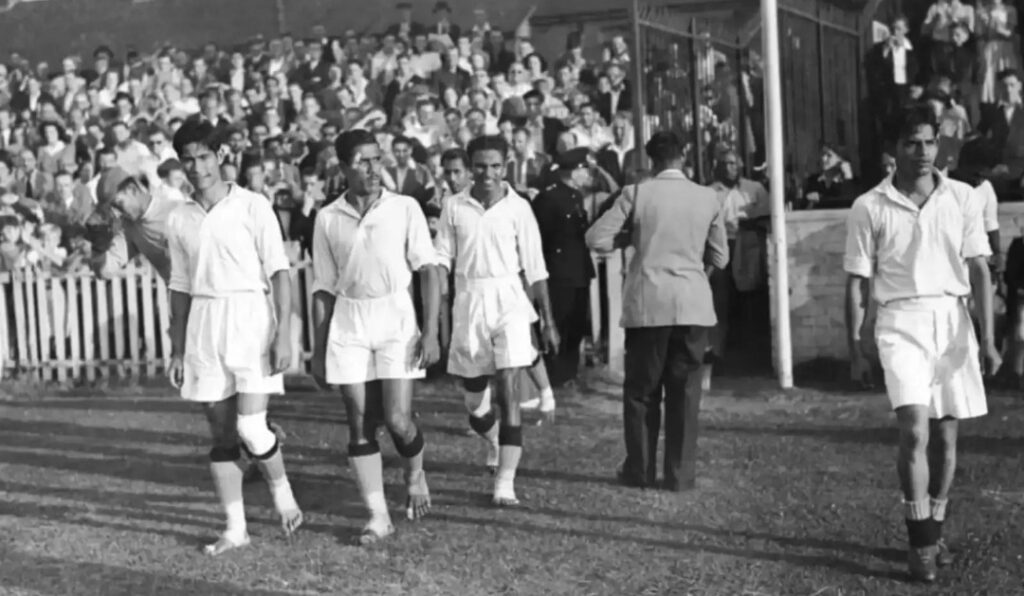
And Ao was not simply part of the squad.
He was the captain.
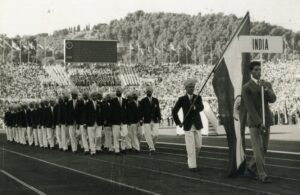
He was also selected as the flag-bearer for India at the opening ceremony at Wembley Stadium.
The significance of that moment is difficult to overstate.
A boy born in Changki, educated in Impur and Jorhat, developed in Guwahati and established in Kolkata was now walking into the Olympic arena carrying the flag of a newly independent India.
India’s Olympic campaign would be brief.
The team faced France in the opening round and lost 2–1.
But the result tells only a fraction of the story.
The Indian players famously played barefoot, and they pushed a much more established French side hard.
The match became part of Indian football history.
And at the centre of it stood the captain from Nagaland.
THE JOURNEY HOME
The Olympic story could have been the end of the legend.
For Talimeren Ao, it was not.
He continued playing football.
He continued studying medicine.
And eventually, he completed his MBBS in 1950, becoming the first Naga to hold the degree.
The two worlds that had followed him since childhood — football and education — had finally converged.
He had fulfilled his father’s wish.
And he had reached the highest levels of Indian football.
But perhaps the most remarkable part of Ao’s story came after the stadiums, trophies and Olympic spotlight had begun to fade.
He came home.
THE DOCTOR
After completing his medical degree, Ao joined Dibrugarh Medical College and later returned to Kohima.
When Nagaland attained statehood in 1963, he became the state’s first Naga Director of Health Services, eventually holding the position until his retirement in 1978.
But even while working as a doctor and administrator, football never left him.
He encouraged young footballers.
He organised and supported local football.
He took an interest in tournaments.
He remained involved in the sport that had taken him from Changki to London.
The footballer had become a doctor.
The doctor remained a footballer at heart.
THE BOY NEVER REALLY LEFT
This may be the most important part of Dr. T. Ao’s story.
The distance between Changki and London was enormous.
But the distance between the boy who played football at Impur and the man who captained India was built one step at a time.
One makeshift football.
One school match.
One training session.
One decision.
One challenge.
One opportunity.
Ao’s life was not a straight road from talent to fame.
It was a story of movement and adaptation.
Changki.
Impur.
Jorhat.
Guwahati.
Calcutta.
London.
And eventually, Kohima.
Each place added something.
Changki gave him his roots.
Impur gave him the beginnings of football.
Jorhat exposed his talent to a wider world.
Cotton College sharpened his sporting ability.
Maharana transformed him as a footballer.
Mohun Bagan gave him a national platform.
London gave him a place in history.
And medicine gave him another way to serve his people.
WHY HIS NAME STILL MATTERS
Dr. T. Ao died in Kohima on September 13, 1998, aged 80.
But his story did not end there.
The Nagaland Football Association’s inter-district championship carries his name.
In 2024, the All India Football Federation announced that its Junior Girls’ National Football Championship would be renamed the Dr. Talimeren Ao National Football Championship for Junior Girls, beginning with the 2025–26 season.
The federation also announced plans to commission a biography of Ao, describing his journey from Changki through Jorhat and Guwahati to Kolkata as one that deserved to be preserved for future generations.
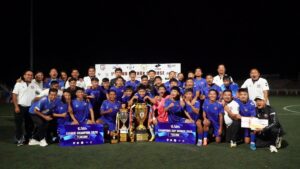
And now, in 2026, the 25th edition of the tournament that bears his name is preparing to return to Mokokchung.
Closer to home.
Closer to the beginning.
THE ROAD BACK TO CHANGKI
That is what makes the 25th Dr. T. Ao Trophy so much more than a football tournament.
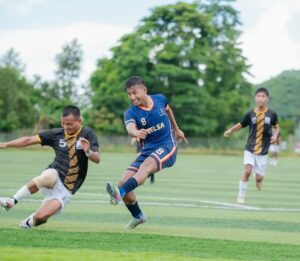
When the districts arrive in Mokokchung this October, they will be competing for a trophy carrying the name of a man whose own football journey began with almost none of the things modern footballers consider essential.
No academy.
No elite development pathway.
No perfect playing surface.
No promise of a professional career.
Just a boy, a ball — sometimes not even a real one — and a love for the game.
And perhaps that is the message today’s players should take from him.
Talent matters.
But so do discipline, education, courage, adaptability and hard work.
The Nagaland government’s own account of Ao’s life describes him as an embodiment of discipline, determination, dedication, hard work and commitment — qualities that carried him beyond the expectations of his time.
He didn’t simply become a great footballer.
He became proof of what a young person from the hills could achieve.
FROM A MAKESHIFT BALL TO THE OLYMPIC FLAG
A century after his birth, the photographs can make Talimeren Ao seem almost impossibly distant.
A black-and-white figure.
An Olympic captain.
A Mohun Bagan legend.
A doctor.
A director of health services.
A name on a trophy.
But strip all of that away and the story becomes remarkably simple.
A young boy in Changki discovered football.
He played it at Impur.
He learned.
He travelled.
He improved.
He kept studying.
He kept playing.
And one day, he walked into Wembley Stadium carrying the flag of India.
That is the journey.
From Changki to London.
And it all started with a boy and a football.
THE DR. T. AO LEGACY
Part I — The Boy From Changki
Coming next:
PART II — FROM THE HILLS OF NAGALAND TO LONDON
How Talimeren Ao went from a promising young footballer in Assam to captaining independent India’s first Olympic football team — and the extraordinary story of what happened after the 1948 Games.