London, 1948. India was barely a year old. Its football team had never played at the Olympics. And at the head of it walked a Naga named Talimeren Ao.
London. July 29, 1948.
The world was still recovering from a war that had ended only three years earlier.
London itself was still scarred by it.
Food was rationed. Buildings carried the marks of the Blitz. The city was rebuilding.
And yet, inside Wembley Stadium, the world had gathered again.
The Olympic Games had returned.
For the first time since 1936, athletes from across the world were marching into an Olympic stadium.
Among them was a delegation representing a country that had existed as an independent nation for less than a year.
India.
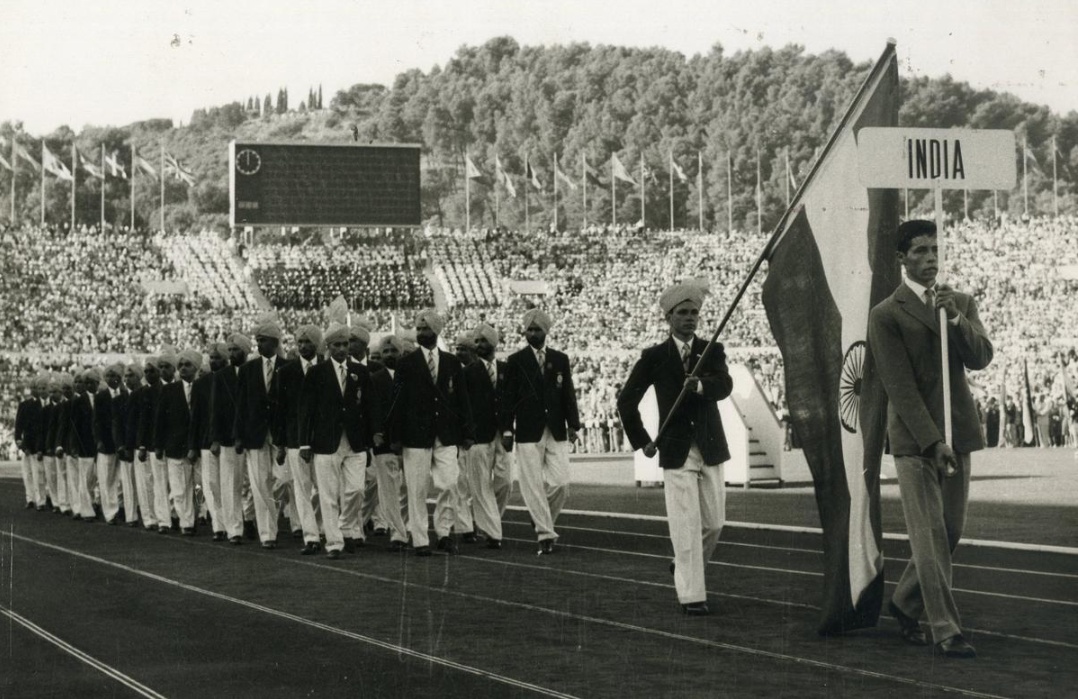
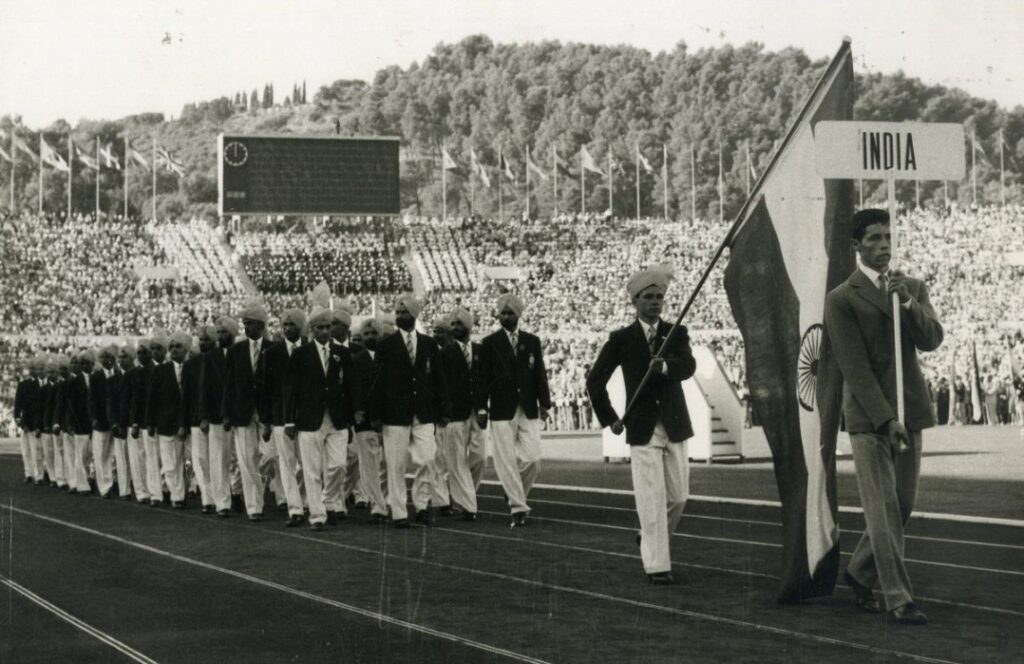
And carrying India’s flag was a 30-year-old footballer from Nagaland.
Talimeren Ao.
It was an extraordinary image.
A Naga.
A football captain.
A doctor-in-training.
A representative of a newly independent India.
Walking into Wembley with the tricolour.
The boy from Changki had arrived at the Olympics.
But nobody yet knew how memorable the next few days would become.
A TEAM FOR A NEW NATION
The 1948 Indian football team was unlike any national side that had represented India before.
This was not British India.
This was independent India.
The Union Jack was gone.
The Indian tricolour was flying.
And for the footballers selected to travel to London, there was something much larger than football at stake.
They were representing a country that was still discovering how it wanted to present itself to the world.
At the centre of that team stood Ao.
He was the captain.
He was also the opening-ceremony flag-bearer.
Olympedia records Ao as India’s flag-bearer at the opening ceremony and as the captain of the football team that competed at the 1948 Games.
The symbolism was enormous.
But the footballers weren’t in London simply to make history.
They wanted to play.
THE ROAD TO THE OLYMPICS
Before the Olympic tournament began, India had already spent time in England playing warm-up matches.
And the results were encouraging.
India defeated:
Pinner FC — 9–1
Hayes FC — 4–1
Alexandra Park FC — 8–2
Three matches.
Three wins.
And a total of 21 goals scored.
The results created genuine confidence around the squad.
The players were not simply tourists.
They believed they could compete.
Ao’s team had arrived in Europe with momentum.
Now came the Olympics.
WEMBLEY
The opening ceremony was held at Wembley Stadium on July 29.
For Ao, this was the moment.
He carried the Indian flag into the stadium.
Think about what that meant.
India had been under British rule for almost two centuries.
Now, at the heart of London, an Indian footballer was walking into the country’s most famous stadium carrying the flag of an independent India.
There is no football result that can compete with that image.
And yet Ao’s story was about to become even more remarkable.
Because two days later, he would lead India into its first Olympic football match.
FRANCE
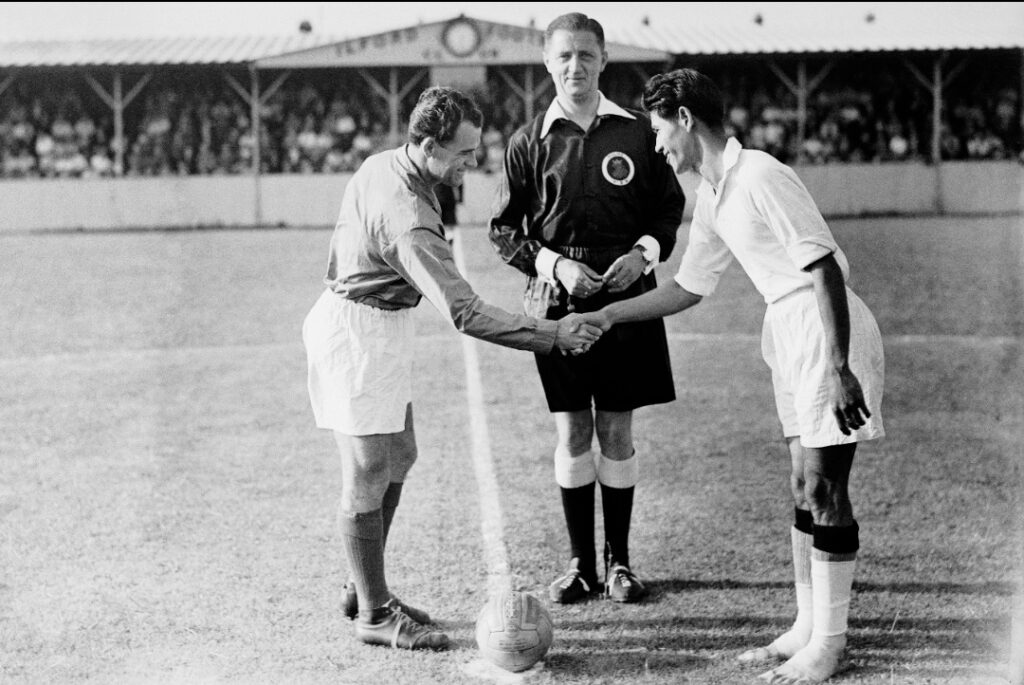
India’s first scheduled football opponent was France.
The match took place on July 31, 1948, at Cricklefield Stadium in Ilford.
Around 17,000 spectators gathered.
India had a difficult challenge.
France had experience.
India had something else.
Fearlessness.
And then came one of the most famous images in Indian football history.
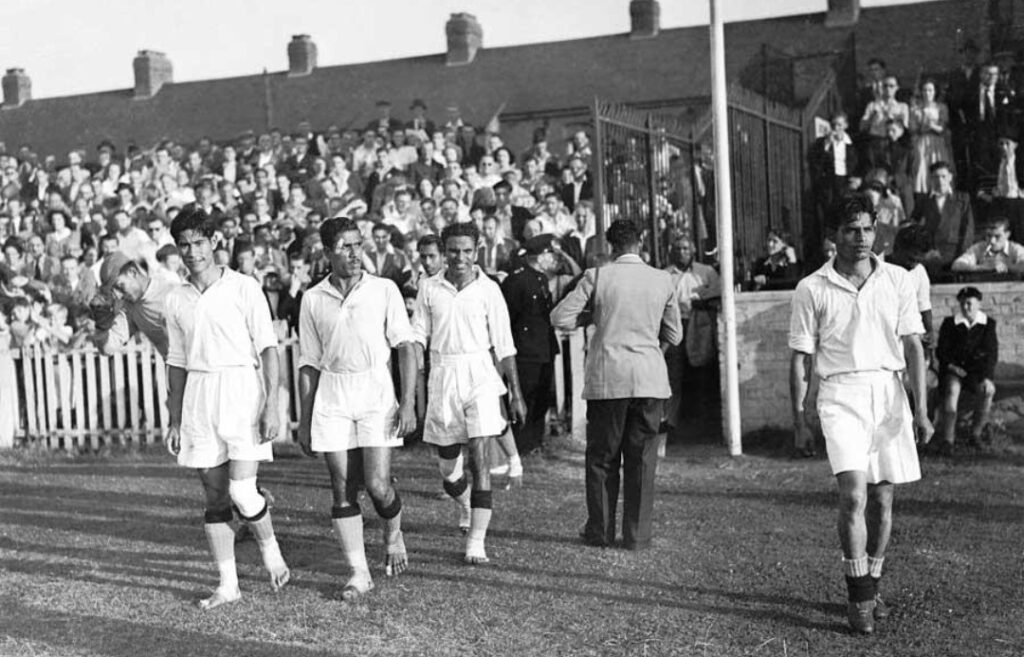
The Indians walked onto the pitch.
Several of them were barefoot.
Eight of India’s starting eleven played without boots.
The image shocked and fascinated spectators.
But there is an important detail often lost in the retelling.
India did not arrive barefoot because the players were incapable of playing in boots.
Some had played in boots.
Some preferred them.
Others chose to play without them.
It was a combination of habit, comfort and the conditions of the era.
Whatever the reason, the image became unforgettable.
The barefoot Indians were about to take on France at the Olympics.
And their captain was Talimeren Ao.
THEY WEREN’T SUPPOSED TO BE THIS GOOD
The French expected a challenge.
What they got was a footballing contest.
India’s technical ability surprised the opposition.
The Indians moved the ball well.
They attacked.
They competed.
And according to contemporary accounts, the crowd responded to the courage and sportsmanship of the barefoot side.
The match was being played under the old 2–3–5 formation, the tactical structure of the era.
Ao operated in the heart of the Indian side.
At the back, alongside Sailen Manna, he was part of the defensive core trying to contain France.
For half an hour, neither side could find a breakthrough.
Then France struck.
COURBIN BREAKS THE DEADLOCK
In the 30th minute, France’s René Courbin found the opening goal.
France 1–0 India.
For a team playing its first Olympic football match as an independent nation, this could easily have become the moment everything collapsed.
Instead, India responded.
They continued to attack.
They continued to create chances.
And before half-time, India were awarded a penalty.
MANNA FROM THE SPOT
The responsibility fell to Sailen Manna.
Manna was one of India’s outstanding footballers.
He stepped forward.
One kick could change the match.
He struck it.
The ball went over the crossbar.
The chance was gone.
India went into the interval behind.
But they were still in the game.
And they were about to write another page into football history.
RAMAN
The second half continued.
India pushed.
France defended.
And then, in the 70th minute, India found their moment.
Sarangapani Raman scored.
France 1–1 India.
Raman’s goal is recognised as India’s first Olympic football goal.
Suddenly the impossible seemed possible.
India were level with France.
A newly independent Asian nation.
Playing at the Olympics.
Many of its players barefoot.
And with twenty minutes remaining, they had a chance to win.
ANOTHER PENALTY
Then came the moment that still hurts.
India were awarded another penalty.
This time, Mahabir Prasad took responsibility.
India had already missed one.
This was the chance to make amends.
To take the lead.
To move closer to an Olympic quarter-final.
Prasad struck the ball.
French goalkeeper Guy Rouxel saved it.
Another opportunity disappeared.
Two penalties.
Two misses.
And still the score was 1–1.
THE FINAL MINUTE
Football can be cruel.
Sometimes the difference between history and heartbreak is a single moment.
With approximately a minute remaining, France attacked again.
René Persillon scored.
France 2.
India 1.
The final whistle came soon afterwards.
India were eliminated.
The scoreboard said 2–1.
But the reaction to the Indian team told another story.
They had not embarrassed themselves.
They had done the opposite.
They had made people notice them.
THE BAREFOOT INDIANS
The story of India’s barefoot players spread quickly.
British newspapers and spectators were fascinated by the sight of Indian footballers competing without conventional football boots.
One contemporary description captured the reaction perfectly:
The French had been given “a run for their money” by barefoot Indians.
The players’ courage and sportsmanship were widely praised.
And according to later accounts, Princess Margaret was among those impressed by the Indian team’s performance.
The defeat had become something else.
A statement.
India had arrived.
THE QUESTION
After the match, the inevitable question came.
Why were the Indians playing barefoot?
It is one of the most famous stories attached to the 1948 team.
The answer attributed to Talimeren Ao has survived for generations:
“We play football in India, whereas you play bootball.”
It is an extraordinary line.
Short.
Witty.
Confident.
And perfectly suited to the image of that team.
There is some uncertainty around the precise contemporary wording of the exchange in surviving sources, so it is better treated as a famous Ao anecdote rather than an independently recorded transcript.
But whether every word survives exactly as spoken or not, the story captures the attitude of the team.
They weren’t embarrassed by being different.
They embraced it.
INDIA’S OLYMPICS DIDN’T END THERE
The France defeat officially ended India’s Olympic football campaign.
But Ao and his teammates didn’t immediately head home.
The team remained in Europe for a series of exhibition matches.
And suddenly, the story changed again.
They weren’t playing France anymore.
They were playing European clubs.
And India began winning.
After their Olympic match, the team travelled through Europe and played further matches in England and the Netherlands.
The results were remarkable.
Against English opposition, India recorded victories over Pinner FC, Hayes FC and Alexandra Park FC before the Olympics, while the post-Olympic tour produced further impressive results.
ESPN records that India played five matches against English club sides after the Olympics, winning three and drawing two.
But one match would stand above the rest.
AJAX
Amsterdam.
The Netherlands.
And one of Europe’s most famous football clubs.
Ajax.
The Indian team faced AFC Ajax in a friendly.
And the result stunned people.
India won 5–2.
It wasn’t an Olympic medal.
It wasn’t an official competitive fixture.
But it was an extraordinary result for Indian football.
And Sahu Mewalal was among the stars of the tour, scoring heavily.
The result would become one of the enduring stories of India’s early international football history.
There is something almost poetic about it.
India had lost to France at the Olympics.
But instead of disappearing from European football, the team stayed, travelled and continued playing.
They showed that the 2–1 defeat wasn’t the full measure of their ability.
THE ARSENAL STORY
Then came another story.
One of the most fascinating — and most difficult to verify in every detail.
According to multiple later accounts, Arsenal showed interest in Talimeren Ao after seeing him play.
A move to England was reportedly possible.
For a footballer in 1948, it would have been extraordinary.
Imagine it.
A Naga footballer.
An Indian Olympic captain.
Playing professional football in England.
At Arsenal.
But Ao did not take the opportunity.
The reason?
Medicine.
He had come to Calcutta to become a doctor.
And he was not prepared to abandon that mission.
The story has been repeated by Indian media for decades, including later accounts in The Telegraph and Times of India, but the surviving documentary evidence is not as strong as the evidence for his Olympic career.
That makes the story interesting — but also one we should present honestly.
What is beyond dispute is what came next.
Ao completed his medical degree.
And he eventually returned to serve in Nagaland.
THE OLYMPIC TEAM THAT BECAME A GENERATION
The 1948 team did not win a medal.
It did not reach the quarter-finals.
Officially, India’s Olympic football campaign ended in the first round.
But history rarely remembers only the winners.
The 1948 Indian footballers became the foundation of one of the most celebrated periods in Indian football.
Players such as Sailen Manna, Ahmed Khan and Sahu Mewalal would go on to play major roles in the years that followed.
And Ao’s career continued into the early 1950s.
The 1948 Olympics had not produced a trophy.
They had produced belief.
THE MAN IN THE MIDDLE OF IT ALL
And at the centre was Talimeren Ao.
Not the biggest name in world football.
Not the most famous athlete at the Games.
Not someone who had grown up surrounded by professional infrastructure.
But a footballer who had somehow travelled from the hills of Nagaland to the centre of the Olympic world.
He had carried India’s flag.
He had captained its football team.
He had stood on the pitch against France.
He had watched two penalties disappear.
He had seen his team score.
He had experienced the heartbreak of a late winner.
And then he had stayed in Europe and helped India defeat Ajax.
It was an extraordinary few weeks.
WHAT IF?
There is an irresistible question attached to Talimeren Ao’s football career.
What if he had chosen football?
What if he had accepted the reported opportunity to remain in England?
What if he had abandoned medicine?
What if he had pursued a professional career in Europe?
We will never know.
But perhaps the more important question is:
Would Talimeren Ao have been the same man if he had?
His story is compelling precisely because football was never allowed to consume everything else.
He loved the game.
He reached its highest stage.
But he also understood that his life had another purpose.
And eventually, he chose it.
THE IMAGE THAT REMAINS
Nearly eighty years later, one image continues to tell the story better than any statistic.
A group of Indian footballers.
Black and white.
Standing together.
Some wearing boots.
Some without them.
And among them, their captain.
Talimeren Ao.
A man from Nagaland.
A man representing a new India.
A man who had walked into Wembley carrying the national flag only days earlier.
The photograph does not tell us what happened next.
It doesn’t show the missed penalties.
It doesn’t show Raman’s equaliser.
It doesn’t show Persillon’s late winner.
It doesn’t show the disappointment.
But perhaps that’s why it survives.
Because it captures the beginning.
THEY LOST THE MATCH.
BUT THEY WON THE MOMENT.
India’s 1948 Olympic campaign lasted only one official match.
One defeat.
One goal.
No medal.
And yet that team became part of the country’s sporting mythology.
Because they represented something bigger than their result.
They were among the first athletes to show the world what independent India could look like.
And at their head was a footballer from Nagaland.
Talimeren Ao.
1948 — THE YEAR A NAGA FOOTBALLER BECAME AN INDIAN ICON
The journey from Changki to London had taken years.
But the journey from London to legend happened in a matter of weeks.
A flag at Wembley.
A barefoot team at Cricklefield.
France.
Two missed penalties.
Raman’s equaliser.
Persillon’s late winner.
The applause.
The European tour.
Ajax.
And the story of an Arsenal opportunity that Ao reportedly turned down.
These are not simply chapters in the career of a footballer.
They are pieces of the story of Indian football itself.
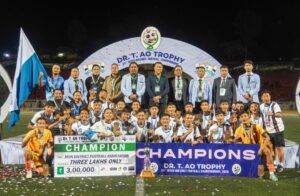
And when the 25th Dr. T. Ao Trophy begins in Mokokchung this October, every player walking onto the pitch will be competing under the name of the man who once walked onto an Olympic field carrying India’s flag.
The players of 2026 will have boots.
They will have AstroTurf.
They will have modern footballs, organised training and a crowd waiting for them.
Ao had almost none of that.
What he had was a football.
A captain’s armband.
And the courage to step onto the biggest stage available to him.
He did not win Olympic gold.
He did not reach the quarter-finals.
But he left London with something that has lasted far longer than a medal.
A place in the history of Indian football.
And a story that still belongs to Nagaland.
THE DR. T. AO LEGACY
PART II — THE CAPTAIN WHO CARRIED INDIA’S FLAG
PART III COMING NEXT
MORE THAN A FOOTBALLER
The Olympics made Talimeren Ao a national sporting figure. But when the applause faded, he chose another path — one that would shape Nagaland far beyond the football pitch.